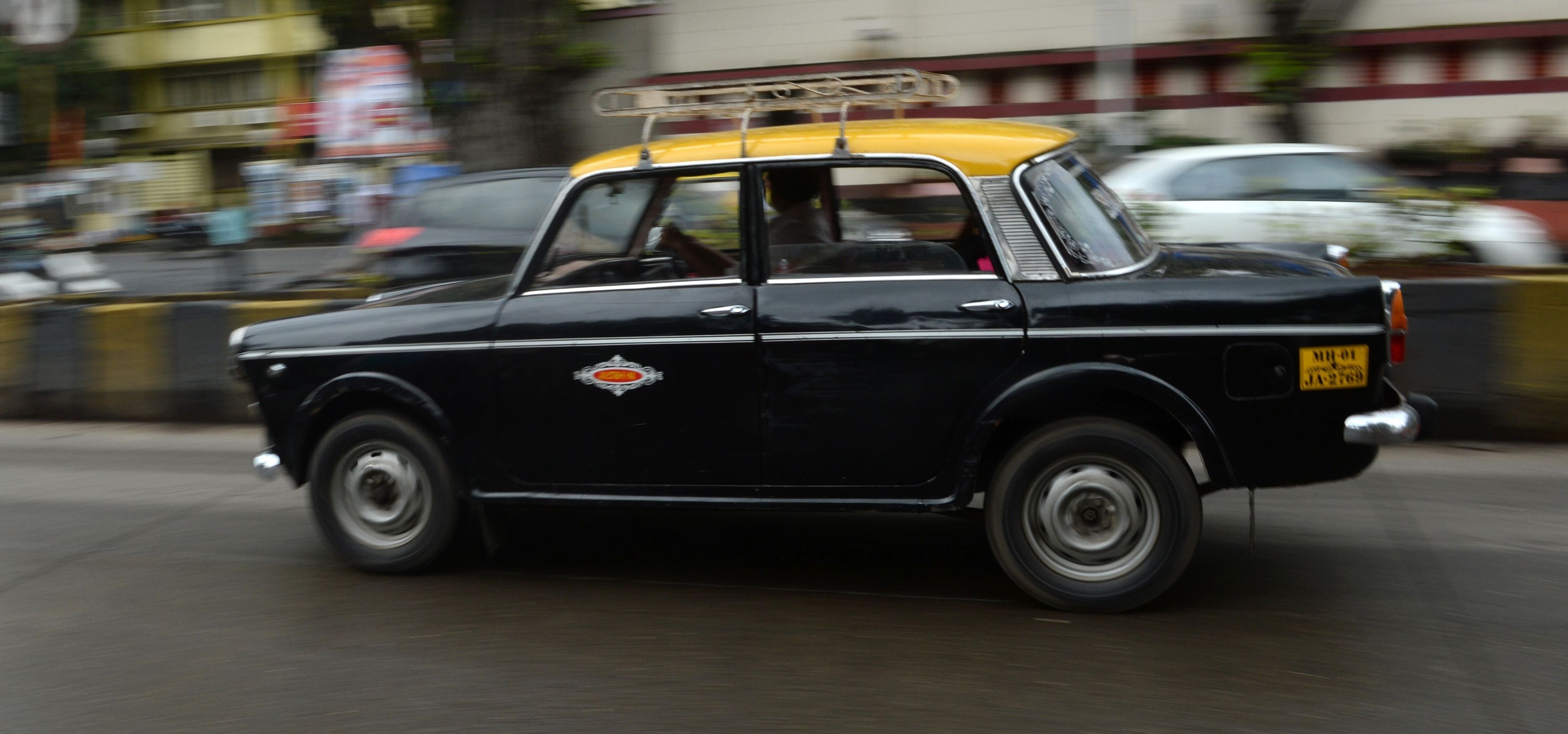
Whenever we think of
Mumbai one of the most common images that we come across in the mind’s eye is
that of the black and yellow taxis wandering proudly on the streets of Mumbai.
In fact, there was a time when every celebrity in the heart of Mumbai wanted to
own the model of a “kaali-peeli” and the streets would be filled with these
particular models of taxis.
But, apparently, it seems
that the legacy of the kaali peelis have come to an end. With newer and more
advanced models of cars taking over the market, the kaali peeli which was
modelled after the Italian Fiat 1200 is set to come to a halt altogether by
2020. These black and yellow cars were fondly called Premiere Padmini and had
become synonymous with the city of dreams. According to a report of Economic
Times on October 7, 2019 there are only 50-60 models of the car left in the
city after their production was stopped way back in 2000.
The first kaali peeli was
deployed in the streets of Mumbai, then Bombay in 1964. It was formerly called
the Premiere President after which it was changed to Premiere Padmini in 1974.
History has it that any authority in Bombay, be it a movie star or a government
official preferred the Padmini more than the bulky Hindustan Motors’ Ambassador.
Anybody who would arrive at Mumbai would opt for these cabs because they had
enough luggage space both down in the boot and the carrier above. In the 90s, a
staggering record of 63,200 kaali peelis were registered with the state
transport department. It is not only the hard features that the taxis offered
which brought it in limelight but also they boasted of being beautiful. The
taxis used to have beautiful flowered patterned interiors, bright and glossy
seat covers and eye-catching neon lights. The only problem with them was their
speed which was not fast enough. Thus, when companies like Hyundai started
entering India, the popularity for these particular models started decreasing.
Gradually, the parts required for these kind of models started going out of
market. But Mumbai being the “jugaadu” city that it is stocked duplicate parts
of this particular model in the garages due to which these didn’t go out of
picture overnight. The Regional Transport office set the final date as June
2020 for the withdrawal of these taxis from the street after the Government
passed a rule of withdrawing any car of over 20 years from the roads.
The kaali peelis are an integral part of the Bombay roads. The Fiat model might be going extinct but newer car models like Alto, Ritz etc. are taking over. But, does that decrease the gloom in the hearts of the taxi drivers who have been in this business for a long period of time? “We always got a word of praise from commuters who found these cabs comfortable in terms of good leg space, suspension and also ride quality.” , reminisced a driver when asked about the current scenario of taxis by The Economic Times. Maybe this was the end term for Padmini. But, for the vast time that Padmini ruled the streets of Mumbai, it confirmed a special place in the heart of every Mumbaikar.
Huge protests broke out in the Aaray Colony area of Mumbai on
October 4 and October 5, 2019 when the Mumbai Metro Rail Corporation started
cutting trees in order to start the construction of a car shed for the third
phase of Mumbai Metro. In spite of the ongoing protests, the Maharashtra
Government fell 2,500 trees in order to build the proposed car shed for Mumbai
Metro 3. On 6th October, 2019, Sunday, the Supreme Court decided to register as
PIL (Public Interest Litigation) a letter addressed to Ranjan Gogoi, the Chief
Justice of India, by Rishav Ranjan, a law student, seeking a stay on the
cutting of trees. “As we write this
letter to you, Mumbai authorities continue to kill the lungs of Mumbai i.e Aarey
forest by clearing of trees near Mithi river bank and according to news reports
1,500 trees have already been cleared by authorities.”, stated the letter.
The student requested the Supreme Court “to
exercise its epistolary jurisdiction to protect Aarey without getting into
technicalities as there was no time for preparation of a proper appeal petition
and cover the scars of these young activists who are responsible citizens
standing for serious environmental concerns”.
The Supreme Court kept the hearing for the case on October 7,
2019. It had a special bench comprising justices Arun Mishra and Ashok Bhushan.
The bench passed the following verdicts on the first day of the hearing:
The
Maharashtra Government cannot cut any more trees before the next hearing on
October 21, 2019. Till then, the special bench will adhere to examining the
entire thing.
All
those arrested for protesting against the felling of trees has to be released.
The Maharashtra Government informed the court during the time
of hearing itself that all those who were arrested for protesting against the
felling of trees had been released already. The number was 29. Also, Solicitor
General Tushar Mehta, who appeared on behalf of the Maharashtra Government,
submitted that he was not aware of all records and ensured that nothing will be
cut in Aarey till the case is decided. The Public Interest Litigation (PIL)
petitioners told the Supreme Court that Aarey was called “the unclassified
forest” by the Government of Maharashtra and thus, felling of trees there was
an illegal act. The Forest Survey of India (FSI) defines “unclassified forests”
as recorded or listed forests but they are not necessarily categorized as
reserve or protected forests. Also, the ownership of such forests may vary
across states. The organization was one of those against which the petitioners
Vanashakti, Stalin Dayanand etc. filed their complaint.
After this, the bench examined the notification by the
Maharashtra Government and declared that Aarey is a no-development zone and not
an eco-sensitive zone as claimed by the petitioner. The Union Environment
Minister, Prakash Javadekar, held on to his decision of not commenting on the
matter as well as the verdict of the Supreme Court but he did mention in a
press conference on October 7, 2019 that there are few countries in the world
whose green cover has increased and that list includes India as India’s green
cover increased by 15,000 square kilometres in the last four years.
On 22nd August, the Supreme Court directed the Brihamumbai Municipal Corporation to place on record any constructional movement planned around the Aarey area. The special bench extended their stay order on felling trees till November 15, 2019. They also mentioned that their stay order pertained to the felling of trees in the area and not to the construction of a car shed for Mumbai Metro 3. It is now only a matter of time before the special bench of the Supreme Court passes their verdict and the fate of Mumbai’s lungs are sealed forever!
Pictures or photographs are one thing that different people
perceive different standpoints about. Some believe that pictures are as good as
trash because people get busier in capturing the event rather than enjoying it
while others are of the opinion that photographs are the most important during
the occurrence of an event. I, belong to the latter group. For me, photographs
are the thing which not only captures the event but also the mood and the
moment. Quite funnily, I have a reputation of being addicted to Instagram. But
tell me, why won’t I be? It is a platform that runs on photographs and I, being
the picture crazy human being, I feel that’s the place where I can express all
my perspectives and sentiments.
Different people like taking pictures of different things.
For some, it’s the people that attracts them, some are interested in professional
shoots, some in boudoir, some in nature and then there are people who simply
either take pictures of every goddamn thing around them or click themselves.
For me, every picture is beautiful. The series of blurry selfies that my mom
sends me in order to learn how to send pictures through WhatsApp, the pictures with
bizzare filters that my dad sends me in order to cheer me up, the pictures with
weird angles of my sister’s face, the unusual picture of a subject clicked by
some amateur photographer- each and every one of them has their own beauty.
I, for one, love taking pictures of the sky. Have you ever
looked at the sky a multiple times in a day? If you have, you must have noticed
that the sky is never the same. Each time I look at the sky I see a different
tone, a different colour, a different hue, a different tinge. I feel like
photographing each second of the sky because it changes. Every moment. Every
second! Each time I have gone and sat at Marine Drive in the evening at around
5-5.30, the only thing I could focus on is the sky. And every time it has been spectacular.
Also, it has a pattern of changing its colours on most of the days. It starts
with a mixture of orange and yellow with a reddish tinge and then suddenly it’s
bright enough to hurt your head. Then, slowly it changes to blue and purple and
then finally it is a mixture of various eccentric shades like deep purple, deep
pink, a little bit of mauve somewhere, a little of Prussian blue and then in an
instant, it is dark and you can see the citylights lighting up on the other
side. The lights of the highrises. Within an hour, it changes as if from the
photograph of an aesthetic traveller to the photograph of a hippie who is out
there searching for his daily dose of cocaine. It is as if a lover’s quarrel!
For me, photographs are an insignificant part of my life. They
are a part of my sanity. Photographs are the proof that somewhere, someday,
things were perfect. Even for a nanosecond. Even for a heartbeat! So, to all
those, who do not like pictures and think that they destroy the moment…wait, till
photographs are the only thing that remain!
Neo-feminism comes into the picture when a female has over boarded feminism. These people believe that men are the core problem to every issue that surrounds the society. To them, body shaming women is wrong but ridiculing a man for his flabs or the scarcity of hair on his head is absolutely fine. For them, the goal isn’t achieving equality but making women the stronger gender. These type of people are so engrossed in the misconceptions of their own thoughts that they often miss out the other genders. Thus, they resort to deride people not only of the opposite gender but of every other gender and sex. Their voices can be heard till the time of their personal derivations. While feminism teaches equality, neo-feminism teaches dominance. It also believes that males are a negative influence to the society. Well, a little bit may be true but it’s not necessary that a women cannot possess negativity. If a man can inflict negative influences on the society such as rage and aggression, so can a woman. Neo-feminists are also believed to be very adamant of their facts. One of the classic examples would be the example of shaving or body positivity. This particular group of feminists also tries to justify the negative things with some random logic. Let us consider shaving body hair as an example. Some women do it because of the hygiene, some because of the beauty. Another example would be body positivity. This particular group tries to justify the obesity of people hidden behind the garb of body positivity or confidence. Even in case of menstrual cycles and sanitary napkins, neo-feminists believe that using napkins makes a woman hypocrite, rather she must be ashamed of her cycles and doesn’t want to let the world know. The common factor among these three examples should be the ‘choice’ of the woman. It should be left completely on the person if she wants to shave or if she is happy being the way she is or if she wants sanitary napkins or not. Neo-feminism refuses to provide this choice!
Even in cases like that of prostitution or stripping, where feminism would solely leave it to the choice of the person, neo-feminism would try to justify the act of stripping or prostitution as a well-established and respectable profession. To some, it might also mean that women are giving men the leash to control them through money in these kinds of professions. The point is, whether it is suitable or not depends entirely on the person who chooses to indulge in it. If it works for you, it works for you! Isn’t it?
Yes! Patriarchy definitely is an existing problem. But, at the same time, neo-feminism and pseudo feminism are making the situation more unlikely and gross. If we are moving forward two steps, we are taking hundred back at the same time. Feminism is not women being better or stronger than men or vice versa. It is a state where women should be provided with what they deserve- be it the seat at the subway, the equal pay at work or simply the basic respect. It is about giving women the identity of their name and not the identity of someone’s mother or someone’s wife or someone’s sister. Neo-feminism inspite of doing good to the existing issues, does more harm. Thus, the correct ideologies of feminism should be taught to all- male, female, transgender,binary, non-binary etc. so that none have a hard time figuring out their own rights and what to give or what to take! Human diversity should be the goal and the key. Our focus should be towards the achievement of it. If women have thousand problems, men are not really free from it. They also suffer from the series of toxic masculinity handed to them by the society. Thus, empowerment is required by all. There is no point in trying to be the dominant gender. A quest of being the dominant gender is only going to create more problems than solutions. Our main focus should be on the empowerment of humans as a whole, implication of empathy and kindness in all our activities and eradication of unnecessary and vile concepts like neo-feminism.
It is often said that there is no dull moment in public
relations. Every day is a challenge and every day is new. But, what happens
when even the most creative of minds fall dull? What do PR professionals do
when they run out of ideas? Also, PR is not always about cultivating ideas and
implementing them but sometimes you need to be smart to re-use and recycle some
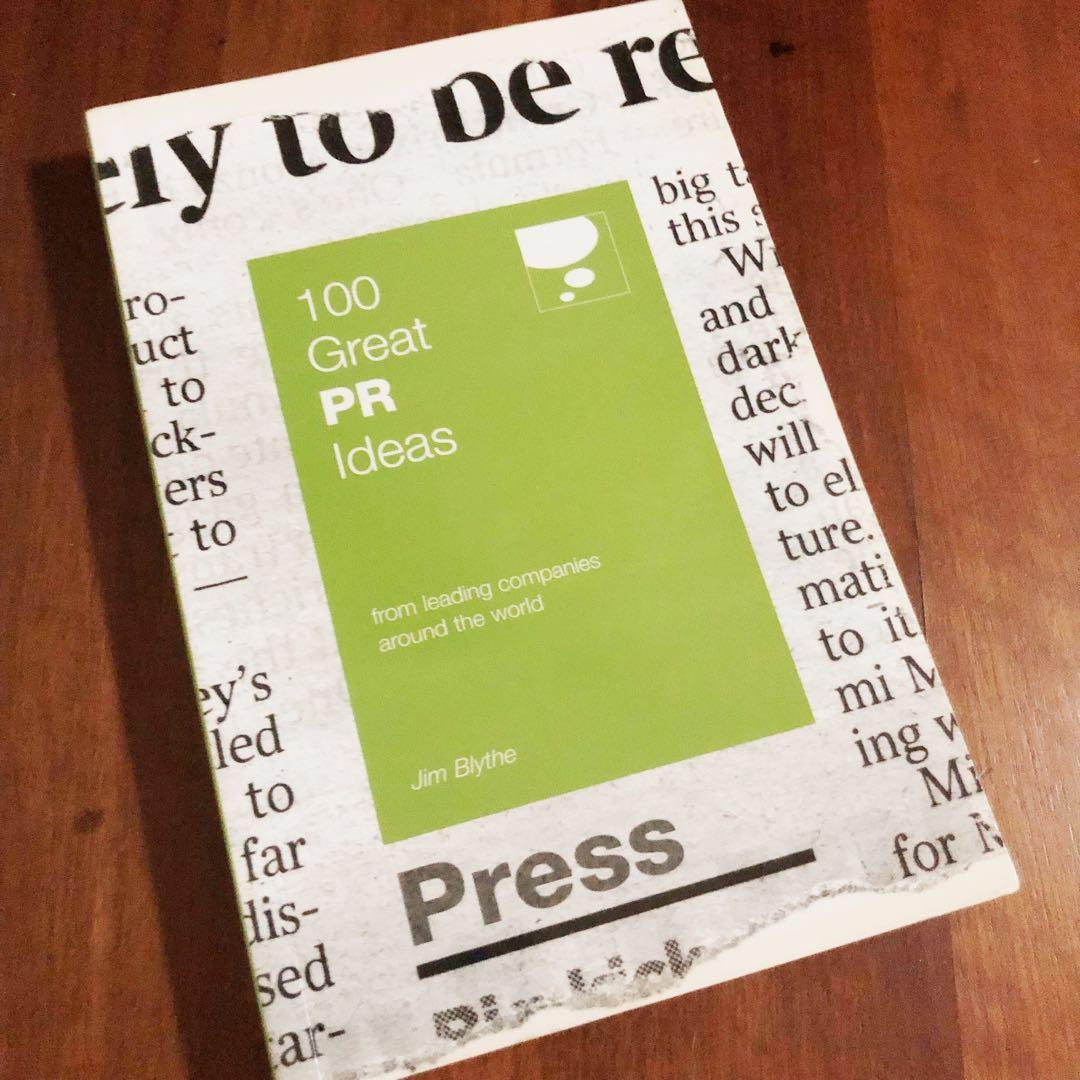
old ideas but in a brand new way! Jim Blythe in his book “100 Great PR Ideas”
has talked about hundred great ideas taken from leading companies around the
world. He is not only a former company director, sales manager and marketing
consultant but has also written 18 books, over 50 journal articles and has
contributed chapters to 8 other books. He is now a business author and a
lecturer, and a senior examiner for the Chartered Institute of Marketing.
Blythe introduces his book by saying that PR for some people
means “press release.” But, PR is not that simple. It is a lot more than
kissing people all over. And in order to do so, it may happen that a professional
might feel a lack of ideas. Thus, his first chapter is about creating a crisis
team. One of the most significant roles of a publicist includes managing the
crisis of the client. Companies should have a well-established crisis team who
can help in anticipating the scenarios and take action accordingly. In order to
explain this further he has given the example of how Eurolines, the European
long-distance bus service handled the crisis when one of their buses going from
Warsaw to London was hit by a lorry in Germany. The crisis team should always
be updated and alert about the whereabouts of the client, try to anticipate the
possible crisis situations that might form, have a properly established plan in
place, practice dummy runs and always stay away from saying “no comments”.
The next idea which fascinated me was “Do good by stealth.”
PR is known for getting earned media and most of the times budget plays a very
important role in the execution of those ideas. Clients are usually ready to
spend on advertising budgets but not on PR days. Jim gives an idea on what to
do in such a situation. Here, he has taken the example of what Body Shop, a
renowned cosmetic brand did in order to spread their name far and wide. Having
no faith on marketing, Anita Roddick, the founder of the brand elevated her
brand through public relations. The brand took initiatives to do activities
like creating a children’s playgroup, supporting a local hospice, fundraising
for a kidney machine etc. and asked its stuff to volunteer for these
activities. This, in return, created a goodwill for the company arising
publicity through the word of mouth without the involvement of any press
release or advertising.
We all know how the celebrities pull stunts. The stunt can be
anything- the rumour of a romantic relationship with an actor of the opposite
gender, brawl with another co-actor, fights with the press or the media or just
a controversial statement. Jim Blythe, is his idea “Pull a stunt” has talked
about how PR people can utilize this in their advantage. All that the PR person
has to do is ensure that the celebrity is fine with the fact that such
behaviour accords with his or her public image. While pulling a stunt is a very
clever PR tool, making the audience wait is another. Harry Potter books are a
classic example of keeping the audience waiting and thus creating a buzz for
the big day. Although it is a very tricky way of generating publicity for your
brand, but Blythe also has asked to make sure that when a publicist is pulling
such an activity, he/she must make sure that the people must find the product
exciting when it releases and also to limit the number of outlets or the supply
of products because that is more likely to create an initial frenzy.
Press Releases are the mainstay of public relations. But, when
a journalist receives a ton of press releases which have the same content
written in the same generic style, they are bound to keep sitting in their
inboxes. So, how can a PR person get the attention of the journalist? Jim,
here, has proposed the “reverse pyramid style”. He mentions that in order to
grab the attention of the journalist or for that matter, even the audience,
there has to be something interesting and unusual about your press release. Thus,
the press release should be written in “reverse pyramid style” which is mostly
followed by journalists. It is different than a generic press release where the
whole story is contained in the deadline and then each paragraph offers a
little more detail. Jim points out that this kind of writing technique usually
stands out and catches the attention of the reader. While press releases are
still the mainstay, it is also another irrevocable fact that the lines between
advertising and public relations are blurring. So, Blythe advices that instead
of working separately, PR should open its arms wide and work hand in hand with
advertising. He has given the example of how Sega introduced its Mega CD games
console with the joint help of PR and advertising. For the first phase, they
run advertisements for fictional products like a cat food and then in the
second phase they showed the ads to be hijacked. Thus, one has to be clever
enough to use both PR and advertisement elements together in a cunning way and
also make sure that the audience gets the joke.
Another very important aspect of PR that the author has
written about in his book is “Piggybacking your story”. The PR firm should
always know where and when to find opportunities and then piggyback their
stories on them. In order to do that they need to be proactive and move at a lightning
speed and definitely talk to the press because not responding to the press will
only make bad things happen. Another important aspect of PR is establishing a
bond with the public. So, Jim suggests to “text the customers”. The prime
audience for messaging is young people and they are likely to be interested in
fast food, music, films, alcoholic drinks, magazines, books and mating-game
products and the publicists can take this chance of connecting with the
customers. For instance, Swansea Sports Flying, a flying school in Wales, texts
its students to let them know that the weather is cleared for flying. Some
banks also take this outlet to let their customers know about their latest
schemes and discounts. Texting is a great and a very helpful way of connecting
directly with the customers but it should also be kept in check that people
shouldn’t feel inundated by too many messages.
The author has also touched upon how extensive writing can
work as great PR ideas. Writing regularly and writing creatively, be it a
regular blog or a diary can help a PR professional stay on the top of the game.
Catching a celebrity in his/her emerging years can help a PR person form a bond
of trust. This is not only applicable on celebrities or journalists, but a PR
person should also know his/her client inside out. Blythe also mentioned that
it is important to play with SEO. Your company should have a strong presence on
platforms like Google, LinkedIn, YouTube etc.
Other than these, there are another bunch of ideas that the
writer has talked extensively about. These
ideas include creating a top ten list, indulging in a random act of kindness,
developing news sensitivity, taking control of your interviews, moving to the
third level of sponsorship, thinking small or thinking local, sponsoring
something for the customers etc. In my opinion, all these ideas are great but then,
the author did not touch upon the use of digital media in today’s scenario.
Also, a number of ideas mentioned in the book have outgrown their time and thus
have become outdated. I am guessing it is because of the time that the author
did not touch upon the latest PR tools like digital media or the use of data
analytics. When the book was published in 2009, neither social or digital media
nor analysis of data played significant roles. Although the book is very useful
but one cannot completely rely on this book for new ideas because there are
also a number of redundant ideas. This book can be a very good example to
understand the traditional methods of public relations. One can also use the
book in case they are entirely out ideas. Whether you’ve a small PR firm of
your own or work for a major global firm or are a newbie to the world of PR,
this book contains something for everyone.
When you
raise one half of the population encouraging them to yell their hearts out, climb
trees and build houses and the other half by hushing their voices and
shortening the length of their skirts, there is going to be a problem. “Feminism”, as a word, covers an
extremely wide range of beliefs and ideologies that after a certain point of
time, it ends up meaning relatively nothing. On top of that, new definitions of
feminism and brand new classifications of people following those definitions
are coming up every other day. A large chunk of people are also of the idea
that feminism is dead while some other chunk has come up with concepts like
meninism, neo-feminism and lipstick feminism. Up until now, my understanding of
feminism was “the advocacy of women’s
rights on the ground of the quality of the sexes”. But, ironically,
according to the third wave of feminism and its sub section, neo-feminism, the
term apparently has evolved into something very unique. After reading up a bit
on the same, what I understood was that the conceptualization was to degrade
men and uphold women as the stronger sex. According to the web, “Neofeminism describes an emerging view of
women as becoming empowered through the celebration of attributes perceived to
be conventionally feminine, that is, it glorifies a womanly essence over claims
to equality with men.” And neo-feminists are women who believe that females
should lead and be more dominant in every aspect, be it work or life. Now, what
is the problem with neo-feminism and why is it an issue?
Feminism in India is like electricity. The half of the country doesn’t get it. As funny as it may sound, it is true. On one hand, women here are taught to co-operate with everything and everyone. They are taught to adjust for the probability of a happier future. Needless to say, that tomorrow never arrives. On the other, men are taught some distorted definition of the concept where one half of the male population forgets the definition as soon as they reach their teenage years and the other half sympathizes with the notion and thinks it is a kind and a mandatory gesture to provide women with the basics. But, only till the time it doesn’t hurt. In such a situation, the rise of neo-feminism as a concept is bound to confuse them. The bigger problem lies in the fact that half the women population is not clear about the attributes of feminism. For instance, the mothers are more concerned about chaining their daughters to the house but will never teach their sons what not to do when they see a girl alone in the streets at midnight. Also, we often come across the special behaviour that is provided to the males of the family- be it the father or the brother. The bigger chunk of everything always goes to them, they always have the possession of the best. In the dining table it is always seen the bigger piece of food going to the man of the family. The woman who is serving isn’t keeping the bigger piece for herself but saving it for the man. Girls’ hostels will have all kinds of rules and regulations and the problem lies in the fact that there are females who believe these rules are for their own good. The misconception is so deeply rooted in the minds of these ladies that it is almost impossible to uproot it and sow the seeds of something new. My roommate, who is a lawyer by profession, told me the other day that to her feminism means stopping at a point where women can work. That should be the limitation of women empowerment. Anything more than that is just giving girls too much freedom.
As a child, I used to be a voracious reader which continued
till my teenage years as well. I would read anything and everything that I came
across. But, as I grew up, the reading was replaced by various other
activities. Isn’t that the problem with half the millennials? Never mind, I
started reading again after I joined my post-graduation course. As strange as
it was to me, I wasn’t drawn to fiction anymore but more towards general
issues. Also, despite having an interest in the art of writing, I never
nurtured the feeling or the activity. It’s only after joining this course that
I’ve started writing on a daily basis and needless to say, I enjoy it
thoroughly.
For me, I think, a piece of writing should be relatable to
the reader. So, whatever I write, I always try to relate some incident of my
own life with the topic I’m writing on. This, I feel, gives a personal touch to
the writing and makes the reader feel congenial. This, according to me is the
most interesting and exceptional about my voice.
Coming to the subjects I’m most drawn to in writing would be
general issues. Now, how do I define “general” issues? It’s not like I write on
hardcore business topics or share markets and their jargons, but I mostly like
to write on topics like feminism, women empowerment, environmental pollution
and the thousand other abstract and non-abstract issues that surround us. My
pieces can be about a city, a movie or a series, an anatomy of an advertisement
or a public relations campaign, a misconception that surrounds the society, a
brand and its positioning and so on. All my topics are loosely based on my
thoughts throughout the day, some on my experiences and observations. So, I
write especially well on them when I combine my line of thinking with my
observations along with a little research and scrutinization on the same.
As a writer, I feel, my responsibility should be writing in
such a pellucid way that it makes the reader question. As a writer, it is my
job to raise my voice against the various social evils with the help of my ink
and let the world know the difference between the right and the wrong. After
all, the pen is mightier than the sword.
To sign off with, I do not have a particular list of
publications or websites that I think suit my writing because firstly, I’m an
ardent believer of “absorbing knowledge
wherever you get it from” and
secondly, I’m still too naive to compare my writing style with anybody or any
publication. But, I do like the articles by Huff Post, Feminism India, The
Brown Girl Magazine, Brand Equity etc. for their presentation of issues in a
crystal clear manner.
As 90s kids, we were pretty much submerged in the innumerable
sitcoms and cartoons that were aired in the television. Whether it was Doraemon
which showed victimization of a single person being beaten into pulp by someone
who was in return body shamed or F.R.I.E.N.D.S where being gay would make you
the butt of all jokes or Big Bang Theory where you would be ridiculed for being
both, well-read or not well-read, we consumed it all. And honestly, it was not
until we reached our 20s when we finally realized the problems with these kind
of shows. What was more ironic? These primetime shows were huge hits and they
even had live studio audiences. And nobody really wanted to be the spoilsport
by calling out the incessant bullying that was portrayed in the disguise of “silly
jokes”.
In F.R.I.E.N.D.S, we remember Ross being the nerd. Whenever he
would talk about paleontology, his whole life’s work regarding it, his friends
would react collectively with a snore. So much for confining the works of your
life in front of your friends. Move over to Monica and we can’t count the
number of times when Monica was insulted, laughed at and made fun of for being
fat during her teenage years. Chandler, the laugh box of the group was often
ridiculed for acting feminine in some cases.
Another iconic show of the 90s was Sex and the City which
showed the independent life of four women in New York. One who would not be
floored away by the impeccable fashion sense of the ladies and would watch the
series with a neutral point of view can easily point out how the show sold
gender discrimination hiding under the garb of women empowerment and
independency. The girls would often resort to humour about the physique of one
of their potential dates, the baldness of men and thus insulting them in the
name of feminism. Samantha, the one who was very open about her sexuality and
her desires was often slut shamed by the other three lead characters. So much
in the name of an “independent chick flick”!
In Big Bang Theory, the lead character Sheldon is again
subjected to “humorous” bullying for being a firm believer of his own studies
and principles on science. In this show, every character has been exposed to
disguised bullying for “n” number of reasons- the female character, Penny, for
indulging in series dating, the Indian character, Raj, for just belonging from
a third-world nation and sometimes the reason was as simple as their own jobs
of physicists which they, themselves termed “boring”.
Have we ever wondered what these shows would be like without
these jokes? As children, we were so engaged with the goodness of these
characters that we often looked over the hidden element in these jokes. We
ignored the parallels of these “simple” jokes in our classrooms, households and
neighbourhoods. However, the tables are turning now. Slowly, they may turn but
we know that these shows wouldn’t have worked in today’s manifesto. “It was the 90s and people weren’t really
very responsive of the issues like homosexuality or racism or body shaming.
F.R.I.E.N.D.S would’ve been a huge doom had it been released today.”, said
Martha Kauffman, the creator of the show in one of her interviews. Thus, let’s
all join hands to deconstruct the bullying that keeps happening around us, in
front of us, through casual sexism and racism. Let us just all spread kindness
and empathy so that our voices persist over the bullies.
Kolkata, known as the city of joy is also known as the city of food. The cultural capital of India boasts about food of numerous varieties. From tangy “phuchkas” to a flaky “kathi” rolls to soft and spongy mouth-watering “roshogollas” to biryanis with the golden “aloos”, it’s literally food heaven. One’s journey to Kolkata remains unconsidered if the person hasn’t tried the various delicacies that the streets of the city offer. Here’s a list of the top five street delicacies that the food paradise puts forward:
Phuchka and Churmur: Now, the names might be similar to tongue twisters but it’s a guarantee that their tastes will twist your hearts too. The speciality of Kolkata phuchkas is that they are made of “maida” and not “sooji’. These little balls of “maida” are filled with mashed potatoes mixed with chickpeas, chilli powder, tamarind pulp and pink salt. This produce a burst of tangy as well as spicy flavour inside your mouth. Churmur is the crunchy blend and is often called the distorted version of phuchka. This is made by crushing the phuchka into little pieces and adding salt, boiled potatoes, tamarind pulp and green or red chillies. One should never have this dish without the chillies. It’s best served spicy!
2. Jhalmuri: People often confuse this with the Maharashtrian “bhel”. But, allow me to break that misconception into a million tiny pieces. Jhamluri is not your quintessential bhel with the red and the green chutney. It’s a mix of puffed rice along with green chillies, spices, peanuts, coriander powder and many other ingredients with a very tasteful “aachar” that can only be found with the “muriwalas”. This is an appetizer and can be found at any nook and corner of the city.
3. Daal Pakora: These little balls are made of simple moong dal paste and served with a garlic and coriander chutney. These go into our mouth to create a drama of the crispy outer covering with the soft inner stuff of daal and the tangy taste of the garlic. Daal Pakoras are only found in Kolkata and you get a handful at a minimal of ten rupees.
4. Ghoti Gorom: We also don’t know the reason behind the weird name of this street food which translates to “a vessel which is hot”. But, apparently it’s because the preparation of this exquisiteness involves a vessel which needs to be hot. This is an union made up of thick salted bhujia, lemon juice, chillies and onions and can be munched any time of the day.
5. Kathi Rolls: Rolls are not really street foods that can be served in a jiffy but this account about Kolkata street food would remain incomplete without the mention of Kathi rolls. Chunks of properly barbequed chicken or mutton with or without a coating of egg along with finely chopped onions and chillies are embedded within a flaky paratha and served hot. It’s made not to stop at one!
These are just a few items that one must lay their hands on
when in Kolkata. Other than these, there are a thousand other food items that
surround every nook and corner of the city. They are so many in number that
this can turn into a pretty thick book. But, that’s for some other day! They
call it the food paradise for some reason. Don’t they?
Levi’s being the inventor of jeans has to stay at the top of their game at all times. Needless to say, the brand does it quite well. Starting from when they had launched their 501s in the 1890s to now when the tables have completely turned, the brand keeps up well with their integrated marketing, PR and advertising campaigns. One of their most famous integrated campaigns that has been going on since 2017 is the “Live in Levi’s” campaign. Today, in this blog, I’m going to talk about the two which I found interesting.
The fifth installment of “Live in Levi’s” came out on August
31, 2017 and it focused on how people connect across the world. It is often
said that language, race, cast and creed might divide people but the connection
of music unites us. Music is the one thing in the world which connects
cultures, countries, traditions and their people through the spirit of
optimism. The advertisement showed people of different races, cultures, ages
all grooving along on the tune of the single Makeba by Jain, a south-African
singer and songwriter. The advertisement beautifully throws the message at the
audience that no matter where we belong from, no matter what our beliefs are or
how old are we, music and dance is for everybody and one can have the time of
their life being in Levi’s all day long, enjoying to the fullest. Also, it
showed that how the brand being a global one celebrates individuality and
commonality. The advertisement was first launched globally on Levi’s owned
digital and social platforms started from U.S and then spread across countries
like China, India, Germany, Spain etc.
The latest installment of the “Live in Levi’s” campaign is
known as “Use Your Voice” and it came out on June 3, 2019. The advertisements
depicts how one’s voice can bring a huge change for somebody or something. We
all have our own voices and isn’t it better to use it as long as we can? Thus,
through the advertisement the brand has illustrated that how their product is
not only merely used by people of different ages but also how the product gives
them a sense of confidence so that they use their voice. That usage can be
about anything- for confessing something, doing something for the first time,
raising it against bullies and people who do wrong or simply for putting your
opinion forward. Our voices can inspire huge changes in the world around us for
we don’t know whom our voice might help. The advertisement has been created in
partnership with FCB, directed by Irish film director, screenwriter and
cinematographer, Aoife McArdle, and set against Jordan Mackampa’s “Battlecry”. This
spot is only playing in across U.S and Europe for now.





 The Amateur's Scratchpad