How are third-genders perceived in the Indian society?

Related image
Source: The Logical Indian

Currently, I have been researching about the transgenders and their acceptance level in the hospitality industry as a part of a particular assignment for which I had to go take interviews from restaurant owners on how they perceive the third-gender people in our society. I had a set of ten questions made amongst which the first one was fairly simple saying “What is your understanding about the transgenders in the society?” I was shocked to see the response. While some people said that they didn’t understand the concept entirely, others said “Oh! Hijras!” after I gave them a little context. Most of them answered that the only thing they know about the third-gender people is that they beg on traffic signals, ask for money in trains and humiliate people by flashing their private parts. This is the general perception about transgenders in our society.

As I moved forward with my interviews several harsh truths were revealed. Since, my research was around their employment scenario in the hospitality industry, my questions revolved more around that only. Quite a big number of people were hesitant in even talking about them, let alone hiring them. It was clearly evident that a lot of them had negative about the transgenders but they don’t want that to come out. So, when I asked questions like “Will you hire a trans gender person in your restaurant?” they resorted to diplomatic answers like “Maybe, somebody else would hire them but I wouldn’t be able to hire them given the type of customers who come here. I’m sure they won’t be able to relate to them.” And these were all 3-4.5 star restaurants where middle class and upper middle class people come. Mr. Jack Tiff (name changed), the owner of a restaurant cum pub said, “You tell me how can we hire these people when they are so arrogant and behave so badly? Have you seen how they dress up? So loud!”

Third-genders have been a part of our society since the advent of time and yet it’s shameful how they are still perceived in the society. They do not get proper education as a result of which they have no scope of employment. Thus, 90% of them are compelled to beg in trains or engage in sex work. Earlier this year, the Supreme Court passed the Transgender Persons Act (Protection of Rights), 2019 which talks about the fundamental rights of the third gender people. But, how much of it is being followed is the big question!

83. How TikTok is changing the face of Digital India?

Image result for tiktok
Source: Cnet

When 22 year old Mitali living in Sultanpaur, a small town in Uttar Pradesh discovered TikTok, she thought that she found a way of life. Mitali is a housewife whose day starts at 5 in the morning with a ton of household chores, making tiffin for her husband and sending her three kids to school. The afternoon is her favourite time of the day when she has finished all her work and she gets to immerse herself in the world of TikTok where she can act and lip sync to any music she wants. It releases all her stress and rejuvenates her mind. Hence, it is indeed a way of life for Mitali.

Now, probably you and I hate the app from the core of our hearts. But, can you imagine the thousand other Mitalis for whom TikTok is the only platform where they can act like the way they want to? According to Statista, an online German portal for statistics, there are 200 million users of TikTok in India of which 120 million are active on a monthly basis. The download rate of TikTok has even surpassed Facebook. According to a report of Economic Times, Facebook garnered 176 million installs while TikTok garnered 188 million in the first quarter of 2019. Also, a lot of these users are first time internet users and yet they are hooked to an app like TikTok despite the controversies that surround them.

But, why is TikTok so popular?
Firstly, there is no language barrier on the app. Unlike many other platforms where users have to stick to a particular language, TikTok provides the facility of using native languages. Thus, users can stick to their vernaculars while taking the advantage of uninterrupted entertainment.

Secondly, unlike other platforms there is hardly any text material to read. Being a video focused app, a large chunk of it relies on music, images and sounds hence making it easier for people of every age group, every economical and educational background to use it.

Thirdly, the features offered by the app are pretty easy to use. One doesn’t have to go through the inconvenience of figuring out how to use the app or its features. They are put in a very basic self-explanatory way. Not only that, but the features are also attractive enough to attract the attention of both kids as well as adults. They have got different kinds of filters, colours, video effects to catch the inquisition of an average user.

Lastly, the app is designed in such a way that it can make anyone viral anytime. The app also has a rule that when someone’s video gets viral, the person receives gifts such as smartphones, watches, speakers etc from the organization itself. Thus, people are always on the zeal to make videos with utmost effort so that they get viral. Everybody wants to be a part of the “15 Seconds of fame”!

TikTok has attained the highest mark of popularity and brought people from different communities and different walks of life together in one platform. On one hand, the platform promotes content based on themes like education, poverty and its eradication, food, environment etc. On the other, the platform also promotes hate-filled speech, videos showing crimes against women, against children, against a certain community, videos featuring violence and utmost disgust. But, in spite of all these, the user base of this particular app keeps growing every day. All that can be hoped is the app manages to guide its users on the right path.

Sources:

Here is what makes TikTok popular in the new digital India

Battleground India: TikTok bests Facebook in round 1

82. The experience of a Blog Challenge

Image result for writing very fast gif
Source: Gyfcat

Two months back on 10th October, our dean at School of Communications and Reputation (SCoRe), gave us a blog challenge called the “60 Day Blog Challenge”.  We had to write one blog each day including Sundays and the topic could be anything. It seems quite easy, right? Let me tell you what, it’s not as easy and breezy as it sounds. Especially, being in SCoRe where there’s a new challenge every day. As soon as I had read the mail where he had listed down all the terms and conditions of the challenge, my mind said I couldn’t do it. It would be too hard to maintain the practice of writing everyday with assignments, presentations and volunteering work. Somehow, I took the opposite decision. I took the resolution of completing the blog challenge and I promised myself that for once in my life I would be consistent, no matter what and I would do it.

Initially, when I began the challenge it wasn’t that hard. I already had quite a few topics in my mind and I would just type down my thoughts on the screen in front of me and the blog for that day would be ready! The actual challenge began when I ran out of topics a week or two later. On top of that, different assignments both individual and group started pouring in and all of them had tight deadlines. There have been days when my mind would be so pre-occupied that it was hard to find out topics to write on. Even if I would find a topic, I wouldn’t have the time to read upon it. On other days, it would be too late working on some other project and I would be too tired to write a new blog for the day. The hardest for me were the weekends when we had to write three blogs on a stretch, one for Saturday and two for Sunday (one weekly blog along with a daily one).

However, it’s almost the end of the challenge. I am proud of myself that I didn’t break my commitment this time. I finished the 60 Day Blog Challenge and there are certain differences that I am witnessing now. For instance? I always had a knack for writing but was always too lazy to start and the blog challenge gave me the push. When I began, I couldn’t write more than one blog a day so I would be really facing a block on Sundays when we had to write two and today, I can write two with ease. We are always told to keep our writing short and crisp which was a huge problem for me and now, I think, some of it is controlled. I explored various topics and read and wrote upon them which would have never happened had I not faced the crisis of topics during the challenge. And lastly, the biggest thing is the consistency that I never knew I had in me. The blog challenge made me learn that in this field of communication, one needs to be prompt and always on their toes no matter how long or tiring the day has been. I won’t say every blog that I have written in these sixty days are mind-blowing but I tried to reflect my best in each and every one of them.

81. Justice or not?

Today, I woke up in the morning with the news of the four rapists who brutally raped and killed Priyanka Reddy, a veterinarian hailing from Hyderabad. For a moment, I was happy, I rejoiced the act like anything. But then, as I read more and more into it, I lost my feeling of rejoice somewhere. I wasn’t celebrating the death of those four anymore. Rather, I was contemplating whether the decision of encounter that was taken was correct or not.

According to the news, the four accused were brought to the scene of crime reconstruction by the police where they tried to snatch weapons from the cops and tried to escape. The police fired their guns and killed all four of them while two policemen were also injured in the action. Now, the question is how true is this explanation? Whatever the Telengana police did was appraisable but was it ethical? If encountering was so justified, then what about the case of Nirbhaya rapists who are still in jail waiting for a statement since the last 8 years? Or more recently, what about the Unnao rape victim whose case was entangled with a political figure?

As the day forwarded, social media buzzed with the news of the encounter. People assigned themselves to one of the two groups that reared heads- one who were celebrating and rejoicing the encounter and the other who thought it wasn’t justified. I, however, found myself in a dilemma. People who belonged from the former category were going berserk about the fact that the police shot them because they were trying to escape and not because they raped a woman. Then, how come this is justice for the crime that they committed? Is this encounter really justified because the convicts belonged from the lowest rung of the social pyramid? Is it a political gimmick that the government played to create a sense of empathy among the public? But, then again to think about it, the second set of people who are rejoicing aren’t incorrect as well. In a country like India, where law and order is next to non-existent or takes almost the entire lifetime of an average citizen, aren’t sudden actions like this the best? At least, some mother some father somewhere would sleep a peaceful night’s sleep today. They were in the prison for committing something heinous to which all four of them agreed. They were just waiting for the final confrontation and conformation by the court. Another complaint from the former group of people was that the encounter by the police was an act of violence to which the latter group replied that wasn’t it violent enough when these 4 people raped, smothered and then burnt the body of Priyanka? Hence, the encounter in an indirect way was the best punishment they could have deserved.

But, these are all our theories where there is no right or wrong. It is just different point of views and perspectives of different people. Was the encounter justified? Or are we as humankind on a whole turning to violence as the only resort? Time will tell.

80. The journey of Public Relations in India (2)

Image result for public relations professional at work gif
Source: Giphy

The second phase of proper public relations started after independence when in 1958 the Public Relations Society of India (PRSI) was established in Bombay. Soon after, in 1960, the first conference of PRSI was held in Calcutta and the Public Relations Society of India, Kolkata chapter was established. But in spite of all these conferences taking place at different parts of India, people were not at all clear about the job role of a PR person. Rather, people started talking about how PR professionals were a similar breed like lobbyists and that they serve no purpose in a company. Thus, a conference was held in 1968 in New Delhi where all the concerns that different people and stakeholders had for the profession of public relations were taken into consideration and addressed. This set the tone for the next Public Relations conferences that followed in the later years.

Came the early 90s and the need for public relations were understood by people more. People started understanding the importance of not only communicating a certain message or an information but also the significance of making that message effective, relevant and impactful to the consumers. Advertising and marketing firms started realizing that it’s only a matter of time before big brands and companies start asking only for PR services and maybe chuck advertising and marketing. In the 1980s, some foreign firms like Ogilvy PR set base in India. In 1993, Genesis PR, the first ever Indian PR firm was established by a lady named Prema Sagar. Not only that, but firms like Ad Factors who specialized in providing IPO services also started offering PR services along with their IPO specialization. During the same time, foreign PR firms like Edelman which was an independent firm by itself and MSL under the holding group of Publicis entered India. The 90s are known to be the golden time for Public Relations.

2002 saw the growth of specialist agencies like Blue Lotus Communications who offered specialization services in sectors like healthcare, consumer, technology etc. In 2001, all the top seven like-minded PR firms namely Genesis Burson Marsteller (now Genesis BCW), Hanmer MSL (Now MSL), Weber Shandwick, Text 100 (now Archetype), Good Relations India, Ogilvy PR, 20:20 Media (now MSL 20:20) formed the Public Relations Consultants Association of India (PRCAI).

Since then, the fortune wheel of Public Relations haven’t stopped turning. Currently, it is one of the very few industries that is growing at a tremendous rate. According to Holmes Report, the PR industry was the only industry which saw a double digit growth of 18% in the last year. This account is a rough of the chronological growth of public relations in India and it can be hoped the journey goes on.

79. The journey of Public Relations in India (1)

Image result for public relations professional at work gif
Source: Giphy

Public Relations as a profession in India is getting popular at an amazing rate. Different brands, big, moderate or small are understanding the importance of Public Relations and what the service can do to impact your brand in a huge way. However, the awareness and understanding about the subject is still not very clear to common people. But, Public Relations in our country is not new.

It has been going on since the mythological era where we get the example of how Narad Muni who is present in both the epics of Ramayana and Mahabharata helped rules in communicating with each other, advised and counselled them to do what are wrong or write for them and took the responsibility of keeping peace and prosperity among the subjects of the kingdoms. Bhadra in Ramayana and Krishna in Mahabharata acted as public relations managers to Ram and Arjuna respectively. Both of them were advisors to their subsidiaries and they did a very good job of communicating the needful between various parties which is exactly what a public relations professional does. In fact, in Indian medieval history, Gautam Buddha, Guru Nanak and Chanakya were known to be great communicators.

This was the very early part which gave the essence of the profession. It was in 1914 when the British Government which acted as the Government of India then set up a public relations board known as the Central Publicity Board. The board was established as a link between the Government and the Press where any message which interests both the entities could be communicated directly.

With time as several companies started rearing their heads in India and set up their bases, they understood how important the role of communications is. The first Indian giant company to set up a public relations department in 1943 was the Tatas. Although, it is known as the first company to have a PR department, it was more like a communication messaging and information department. Public Relations and the activities associated with it began properly with PSUs like BHEL, ONGC, Bhilai Steel Plant etc.

After this, the train of Public Relations as a profession took up speed and newer things started following.

78. JNU stories

Image result for jnu hostel hike protest
Source: BBC

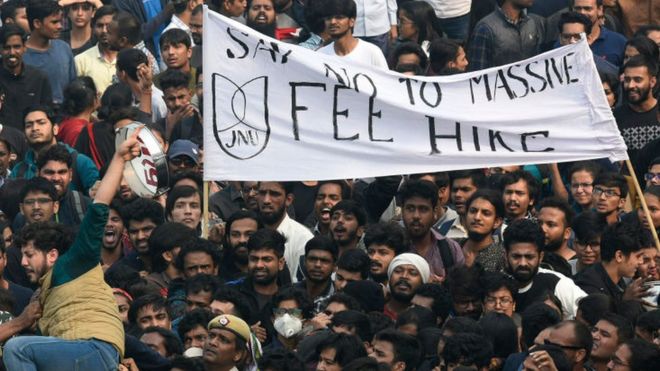
Madhav is from a small town in Uttarakhand. His father is a local train hawker of clips and combs. He doesn’t make enough to feed his family a proper three time meal. Madhav’s mother suffers from acute bronchitis pneumonia and whatever little bit Madhav’s father manages to earn, more than half of it goes into her treatments and medications. However, right from the childhood, Madhav has been extremely brilliant in studies. The everyday hardships of his life has taught him the value of money. He has somehow ended up earning a scholarship with which he is studying in Jawaharlal Nehru University as a student of political science. His aim? It’s to eradicate poverty as much as he can. His dream? It is to ask his father to stop roaming in local trains as a hawker.

Rini is the eldest of two sisters and two brothers. She hails from a miniscule village somewhere on the outskirts of West Bengal. Her dad was a drunkard who left his family alone and while going stole all their money, whatever they had. As the eldest daughter of the family, it is her responsibility now to take care of a family of five along with herself. Her mom already does enough back home. She stays in the JNU hostel and is studying economics. Rini has long days. She wakes up at 5 in the morning to attend all her classes and then in the evening she sits as a receptionist in a doctor’s chamber. That is how she sustains for her family.

Udbhav is the son of a rickshaw puller. Every day in the evening when everybody in the campus would chill with tea and snacks, he would eat dry “muri” (puffed rice). He can’t really afford anything else.
Icchaa is the daughter of a sex worker. She knows how hard her mother struggles to provide for her. She wants to be an M.Phil in literature someday.
Vishesh used to work as a security guard of an apartment before he got through JNU as a research scholar in Computational and Integrative Sciences.

What is the similarity between all these stories? I don’t think I need to give the answer. All these people come from similar strata of life who have seen the everyday struggle with acute poverty, hunger and agony. Each and every one of them have and are still going through their own battle of being a successful person in life. And yes, no matter how stereotypical it may sound but success to them means being able to provide for their family, see that little curve of smile on their parent’s faces. It is just not the increment of some money as college hostel fess and yes, there are people who would afford it with utmost ease. But for these people like Madhav, Rini, Udbhav, Iccha and Vishesh the JNU hostel is the way of life, the hostel food is the only option. They knew their capacity to afford and thus all of them gave their blood and sweat to be where they are now. Is it fair to increase the fees overnight? Is it fair not to give them what they deserve? Will it be fair to compel them to go deeper into the vicious cycle of poverty and negligence? Will it be fair to push them deeper into the dark?

77. This month in books: Made to Stick

Why Some Ideas Survive and Others Die

Authors: Chip Heath & Dan Heath

Publisher: Random House

Year: 2007

Chip and Dan Heath are two brothers who in their book “Made to Stick” has written about several ideas and why some of them stick while the others don’t. As human beings, we all come across our own ideas and strategies. But, it’s not necessary that what fascinates us will also fascinate others and thus when we create an idea for a mass, some of them do end up making an impact on people while some flop miserably.

The book starts with the ‘Kidney Heist’ tale. A man called Dave walks into a bar and orders a drink. No sooner than he finishes one drink he is approached by an attractive woman who gets two drinks when he says yes. That is the last thing he remembers when he wakes up in a bathtub filled with ice. He notices a cellphone lying on a small table in front of him. He picks it up and calls 911 and the person on the other side asks him to reach his back slowly and carefully asks him to check if there is any tube protruding from his lower back. When he answers in positive, they ask him wait there for the paramedics who were on their way. This story is a classic example of thriller and horror that all of us have listened to at least once or twice in our lives. The Kidney Heist is a story that sticks with us. It sticks in our mind in such a way that we can recall and narrate it to other people at any given point of time.

Another example of a sticky idea that the authors have written about in the book is about “CSPI movie popcorn”. What they did was they just presented a message: “A medium-sized ‘butter’ popcorn at a typical neighbourhood movie theatre contains more artery-clogging fat than a bacon-and-eggs-breakfast, a Big Mac and fries for lunch, and a steak dinner with all the trimmings-combined!” The only thing they added with it was visuals. The story was an immediate sensation and was featured on CBS, NBC, ABC and CNN. The idea became so widespread that people actually stopped buying popcorn and their sales dropped drastically.

Now, these were two examples of how some ideas stick and survive beautifully. Here’s an idea which did stick but in the most negative way possible. It’s called “Who spoiled Halloween?”, In the 1960s and 1970s a rumour spread about Halloween that people are putting razor blades in apples and booby-trapping pieces of candy. The rumour spread so badly that parents examined their children’s candy bags, schools kept open at nights so that children could trick or treat in a safe environment and hospitals volunteered to X-Ray candy bags. Two researchers, Joel Best and Gerald Horiuchi researched and studied every report and in the end they found that the two kids who died, their deaths weren’t caused by Halloween.  The five year old boy found his uncle’s heroine stash and overdosed. In the other case, a father wanted his insurance settlement and thus mixed cyanide in the candy of his own son. Although the real issue was uncovered but by then it had grown so big that it already stuck negatively to people’s minds. The candy tampering story made parents suspicious of their neighbours and destroyed the feel of the celebration.

The book further talks about the six principles of sticky ideas, in short the “SUCCESS” checklist. The six elements of SUCCESS are as follows:

  1. Simplicity: Every idea that you work on has to have a simple touch. The core idea that you want to explain the audience should be clearly communicated.
  2. Unexpectedness: The unexpected principle is very unique. It doesn’t say that be ready for the unexpected situation. It says that one needs to create unexpectedness in order to attract people’s attention just like a bag of popcorn did,
  3. Concreteness: One needs to be very clear in the way they are communicationg their ideas. One needs to very clear and correct in the way they are communicating their idea.
  4. Credibility: How do we make people believe that it is our own ideas? Whenever one presents an idea, they also need to relate it with some personal stories and experiences so that it gets more credibility and feels more authentic.
  5. Emotions: The audience is a sucker for emotions and the moment you associate your idea with an emotional story, you know your audience is hooked.
  6. Stories: We are all big fans of stories. Be it a normal one or a sad one or a humorous one, every time there’s a story, the audience is more and more attracted towards it.

The last chapter of the book that I would like to talk about is the chapter of “STORIES”. The authors understand that whenever there’s a story about something, the audience is already attracted to it. It doesn’t really matter if the story has a happy or a sad ending. They have started the chapter of stories with the story of a baby’s heart. It says that once a baby was in the neo-natal unit of a hospital getting treated where a nurse was taking care of his heart and lungs. Suddenly, at a time, the baby’s body colour turned to blue-black. She understood that it was a heart problem but the other medical personnel said that it was a lung problem. But the baby passed away after a while even when the nurse tried her level best. Later, it was found out that the heart monitor mislead them. It was designed to measure electrical activities and not actual heartbeats. This is a story by Gary Klein, a psychologist who studies how people who are in high-pressure act or react or take decisions. According to him, this story gives us the moral that how the idea of relying too much on machines made the medical personnel take a wrong decision that costed the life of a new born baby.

The book is a great resource for someone who is creative and does not want mundaneness in their ideas especially for marketeers. It gives the readers a new way of looking at strategic and effective communication along with teaching you how to keep your communication simple but impactful. They also explain the ideas with simple phrases like, “Nice guys finish last”. Through the book, the readers get an idea of what to believe and what not to believe no matter how lucrative they are. And most importantly, they have explained beautifully why some ideas survive and the others die.

76. 26/11, 2008- 26/11,2019

Related image
Source: Newsgram.com

9.05 p.m: My friend, Shreya, and I were coming back from our mathematics tuitions. We were in the fifth standard. We had a test that day in the tuition and as usual I didn’t fair very well. Mathematics have always been my weakest part while Shreya was way too good at it. We were coming back with me getting 10 out of 25 and her getting 22 out of 25. The smile on her face was priceless. Our coaching wasn’t very far away from our houses. So, on the way we stopped for ice cream. She was treating me. She was so happy!

Suddenly, we saw Ramesh uncle, one of our neighbours running towards us frantically. The moment he noticed us he stopped for half a minute and then dragged us both by our hands. We were so flabbergasted by his action that when we started dragging us none of us asked him anything. He kept on blabbering something on his own. After a few minutes, I asked him what has happened. He didn’t reply. We were startled to see Ramesh uncle like that. “He is always smiling and so jolly. Then, why is he behaving so strangely?”, I thought to myself.

As we reached closer to our houses, we noticed a small crowd. It was mainly our neighbours who were standing and talking in hush hush tones. We navigated through the crowd to reach the gates of our houses to find Shreya’s mother crying like a maniac almost blurting her veins out and my mother holding her in her arms. Shreya and I ran towards our mothers and asked them what happened but nobody replied. Her mom kept crying loudly and my mother kept holding her and sobbed. Meanwhile, Ramesh uncle’s wife took us in and gave us some food and told us not to ask them anything again. We sat down on the corner of our balcony and kept looking at whatever happened in front of us. All our neighbours came one by one and tried to console Sudha aunty, Shreya’s mom but she kept wailing. Shreya and I discussed some possible scenarios but well, we were too naïve to understand what had happened.

After a little while, my dad came and all of us went inside the house. My mother took Shreya’s mother in and asked me to give Shreya one of my clothes. It was a sleepover! We should have danced in joy but somehow, we didn’t feel like it. That night, nobody had dinner. We all just watched the news for two long hours and for the first time, I liked watching it. But I didn’t like what I saw. There was too much blood, too many dead bodies, too much noise from the television set and too much tears from Shreya’s mom. I connected the dots but kept mum. I didn’t want it to be true. But, what if what I thought was right? I couldn’t think further.

 Once we were in our beds, Shreya asked me if I had realized what had happened. I said, yes I did. And then she told me, “Baishali, you know what? I think I want to be an IPS officer just like Dad. I don’t exactly know what terrorism is but I learn more about it and one day I will eradicate that from the world. Till then, I got to be strong for mom. Just be friends with me, okay? All your life?!” We made the promises and went to sleep. Two days later, her father’s body came back home wrapped in white.

Fast forward 11 years. Five days back Shreya called me to let me know that she cracked the Civil Services Exam. “Baishali, I made it. And now it’s my duty to fulfill the promise that I made to you 11 years back.”, she said and then cried.

75. Hunger Games?

Image result for hunger in india
Source: India.com

Rahul is 25 years old. He has got his first job two months back. His everyday routine includes him coming to office, working on the tasks he has been given and taking innumerable smoke and snack breaks in between. He would work for forty five minutes or an hour and then go down for a smoke and some snacks. Traits of new found freedom, right? So, every time he would opt for a snack with his fag he would finish the food sometimes and other times, he would just eat half of it and then throw away the rest.

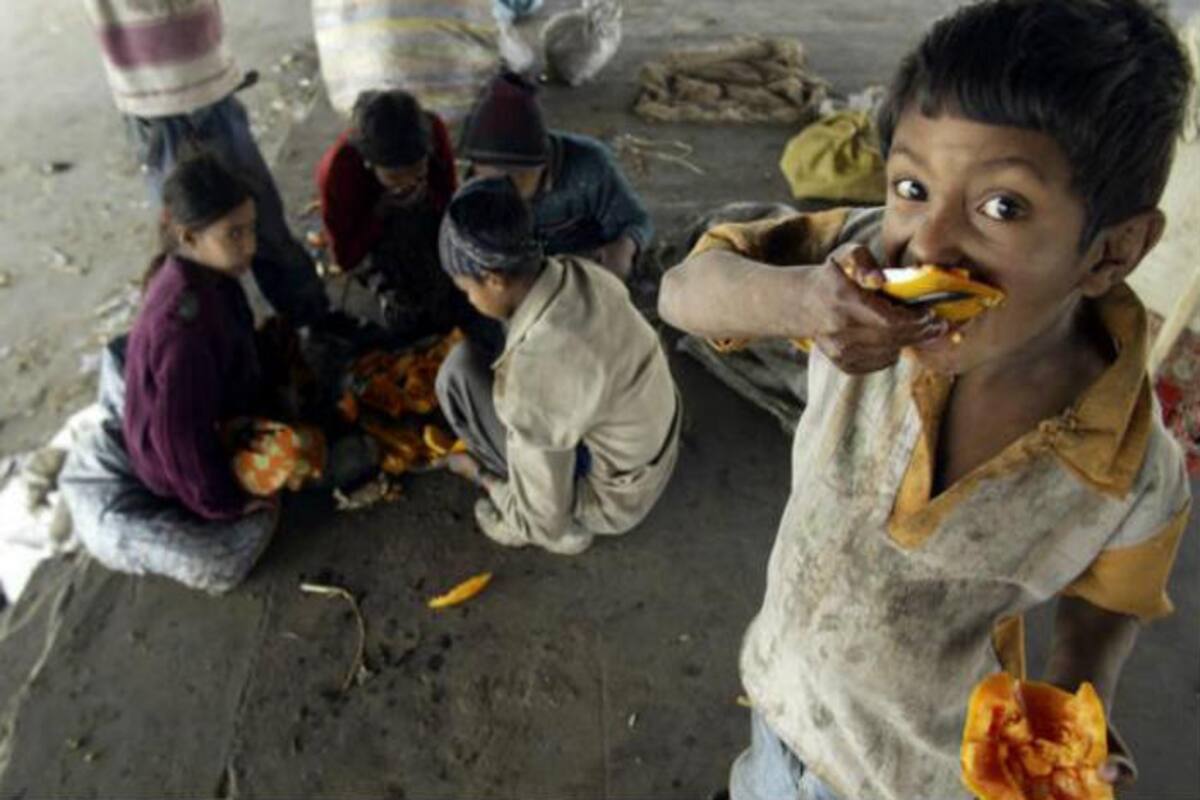
Haroon, a boy of 7 years lives on the footpath opposite Rahul’s office building. Every day, he would wait for Rahul and people alike him to throw away parts of their food so that he can scrape down the remaining and eat. His father doesn’t live with them and his mother doesn’t earn enough to feed him three times a day.

One day, Rahul comes down for his usual break and buys a sandwich as a snack. He eats two slices from it and throws the rest because he doesn’t like the taste of the sauce inside it. He decides to have a cup of tea to change the after taste of his tongue and that’s when he notices Haroon scraping the leftover sandwich from the dumpster and eating it with a huge smile on his face. Rahul gets startled and moves forward to stop the little boy but before he could do that Haroon starts vomiting blood and becomes senseless. Rahul is too shocked to move. He realizes what he has done.

Now, this story isn’t to blame anyone. We often waste food. Most of the times we ourselves don’t understand how hungry we actually are and end up ordering more than we can consume. Sometimes, the taste also plays a role in throwing away the food. We just can’t bear to eat it because the taste is abysmal. But, there are hundreds and thousands of people who wouldn’t care about the taste or the texture of the food. They would just eat it because it fills their stomach. According to a report by Food and Agriculture Organization (FAO), of United Nations 194.4 i.e 14.5 % people in our country are undernourished. 40% of the produced food like vegetables and cereals are wasted. 4 out of 10 children like Haroon are brought to the hospital with diseases occurring from dirt and food poisoning.

It is high time that we start to understand the value and importance of food and hunger in our country. We should be more conscious about the amount of food we order. Restaurants and fast food chains should take the initiative of building a food bank outside their gates so that people can put their leftover food in those banks. That way, the humungous amount of food that is wasted everyday would be saved along with the lives of those who go to sleep every time with hunger in their stomachs.

Source:

https://www.indiafoodbanking.org/hunger